Curriculum
Four Years of Purposeful Training
At Lahey, you'll train within a clinical environment of exceptional depth and breadth and a thriving academic ecosystem with access to a world-class research infrastructure. Our ACGME-accredited four-year progressive curriculum designed to build clinical mastery, procedural confidence, and scholarly identity — year by year, rotation by rotation.
Curriculum by Year
Building the foundation
Interns spend the majority of the year in Lahey's Level I Emergency Department, developing core clinical skills under close faculty mentorship. Critical care, pediatric emergency medicine, procedural training, and ultrasound are introduced early. Establishing the building blocks of an exceptional emergency physician from day one.
Emergency Medicine 6 blocks Lahey Clinic
Orientation/Anesthesia & Nerve Blocks 1 block Lahey Clinic
Pediatric Emergency Medicine 1 block Boston Children's Hospital
Medical ICU 1 block Lahey Clinic
Pediatric ICU 1 block Massachusetts General Hospital
Cardiology 1 block Lahey Clinic
Ultrasound 1 block Lahey Clinic
Broadening clinical range
PGY-2 expands into the full spectrum of emergency medicine subspecialties: obstetrics, surgical critical care, neonatology, EMS, orthopedics, and ophthalmology. Residents deepen their community medicine experience at Winchester Hospital and pursue individual interests through their first elective block.
Emergency Medicine 4 blocks Lahey Clinic
Community Emergency Medicine 2 blocks Winchester Hospital / Beverly Hospital
Surgical ICU 1 block Lahey Clinic
Pediatric Emergency Medicine 1 block Winchester Hospital
Neonatal ICU & Opthalmology 1 block (2 weeks split) UMass Memorial & Lahey Clinic
Obstetrics & Gynecology 1 block Winchester Hospital
EMS & Orthopedics 1 block Lahey System
Elective 1 block Flexible
Building independence
PGY-3 residents take on greater supervisory responsibility with seven months of EM including a dedicated community block at Beverly Hospital. A research block, neonatal ICU, urgent care, and telemedicine rotations round out the year as residents begin shaping their scholarly identity. Observation rounds on morning shifts are introduced this year.
Emergency Medicine 7 blocks Lahey Clinic
Community Emergency Medicine 1 block Beverly Hospital
Pediatric Emergency Medicine 1 block Boston Children's Hospital' Hospital
Neuro ICU 1 block Lahey Clinic
Urgent Care & Telemedicine 1 block Lahey System
Research 1 block UMass Chan / Lahey Clinic
Becoming a Leader
Senior residents rotate across the full network — Lahey, Winchester, Lahey Peabody, and UMass Memorial — managing complex cases with near-attending autonomy. A dedicated research block, elective, and administration/toxicology rotation prepare residents for independent practice and career launch. Observation rounds continue this year.
Emergency Medicine 5.5 blocks Lahey Clinic
Community Emergency Medicine 1 block Winchester Hospital
Rural Emergency Medicine 1 block Lahey Medical Center (Peabody)
Pediatric Emergency Medicine 1.5 blocks UMass Memorial / Winchester Hospital
Administration & Toxicology 1 block Lahey Clinic
Research 1 block UMass Chan / Lahey Clinic
Elective 1 block Flexible
Throughout all four years:
- 5 hrs/week protected didactics
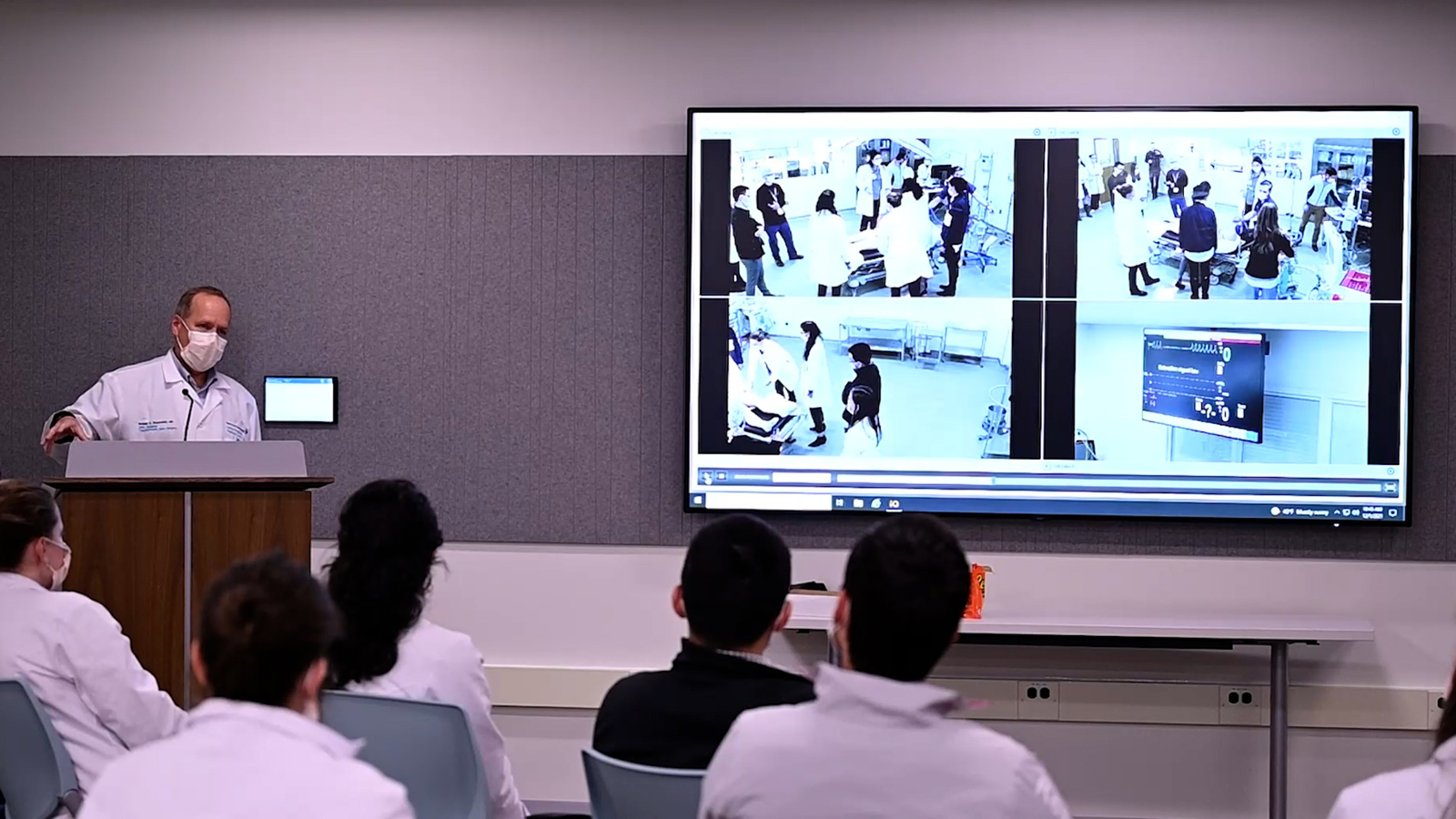
- High-fidelity simulation
- Longitudinal POCUS training
- Faculty mentorship
- Observation rounds (PGY 3–4)
- Wellness programming
- CQI & patient safety