

Hair loss has many causes. Each one looks different and needs a different plan. This page explains the conditions we see most often at the Lahey Hair Loss Center of Excellence.
Scarring or nonscarring?
The most important question is where the damage happens. Every follicle has stem cells near the top, in an area called the bulge. If the stem cells survive, the follicle can make a new hair. If they are destroyed, scar tissue replaces the follicle and that hair cannot regrow.
Nonscarring hair loss has many causes. In alopecia areata the immune system attacks the bulb. In pattern hair loss and telogen effluvium, the immune system does not destroy the follicle. In each case the stem cells survive.
This is why scarring alopecias need early treatment. The goal is to stop the inflammation and protect the hair that remains.
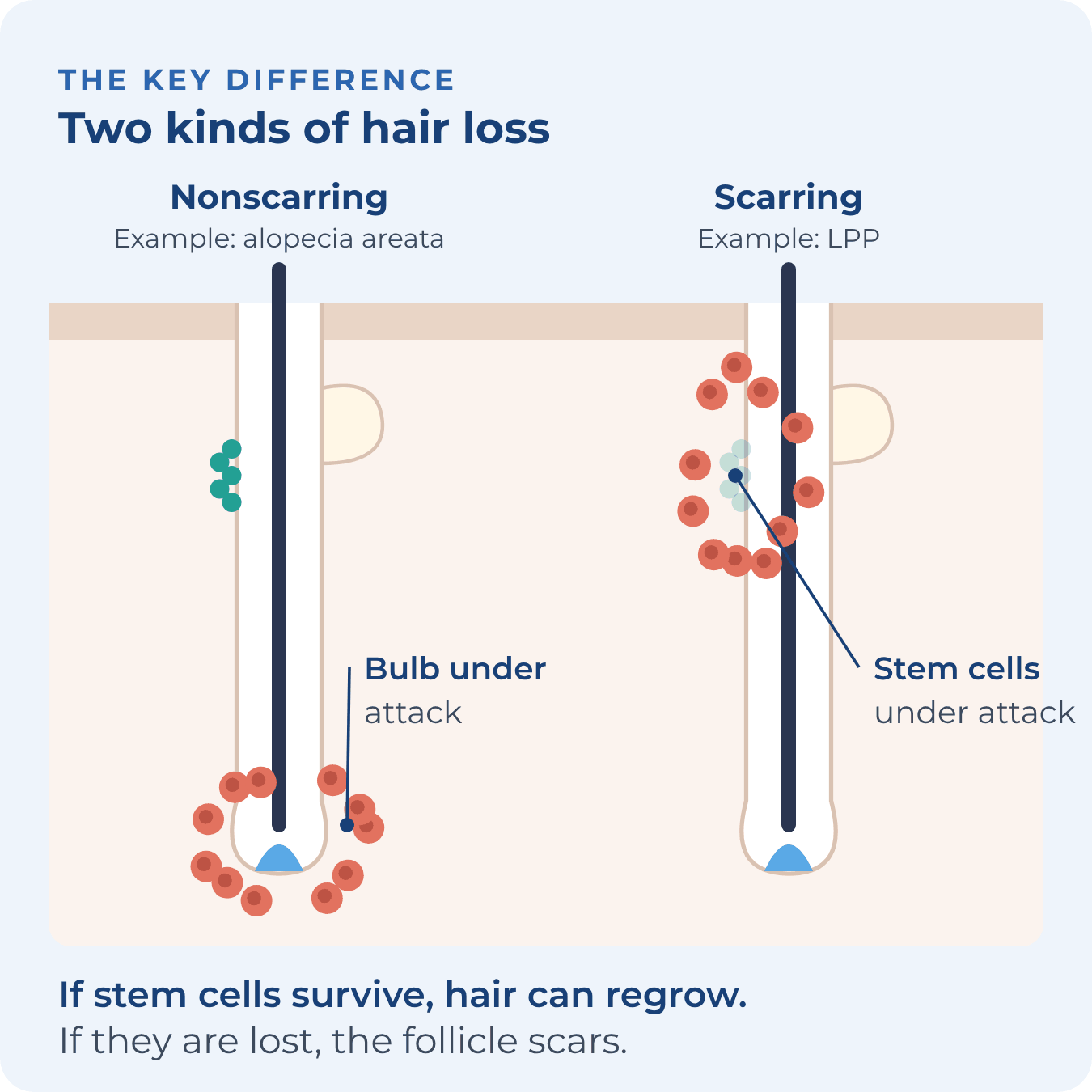
Nonscarring hair loss
Alopecia areata
Alopecia areata is an autoimmune condition. The immune system attacks the base of the hair follicle and causes patches of hair loss. The follicle is not destroyed, so hair can grow back.
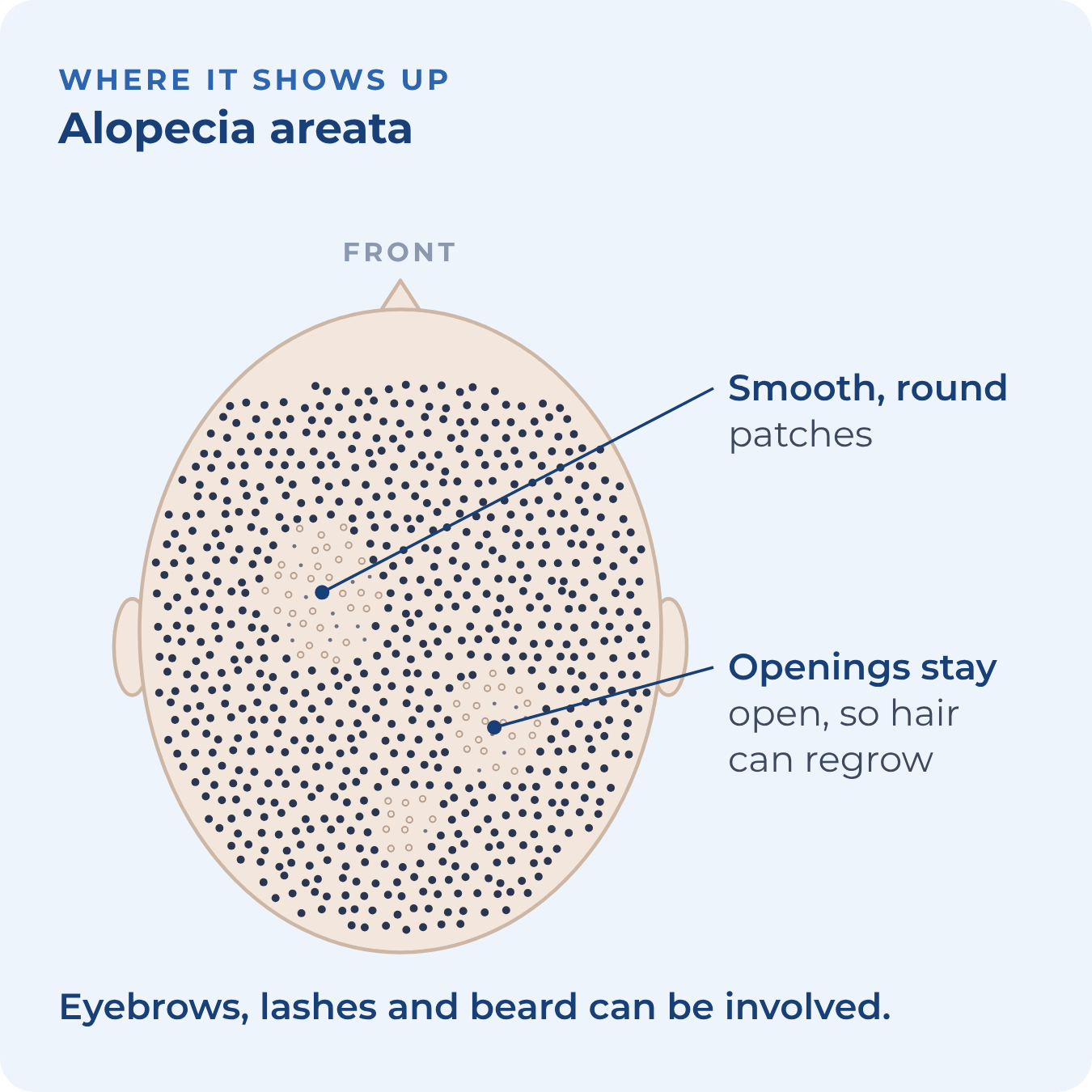
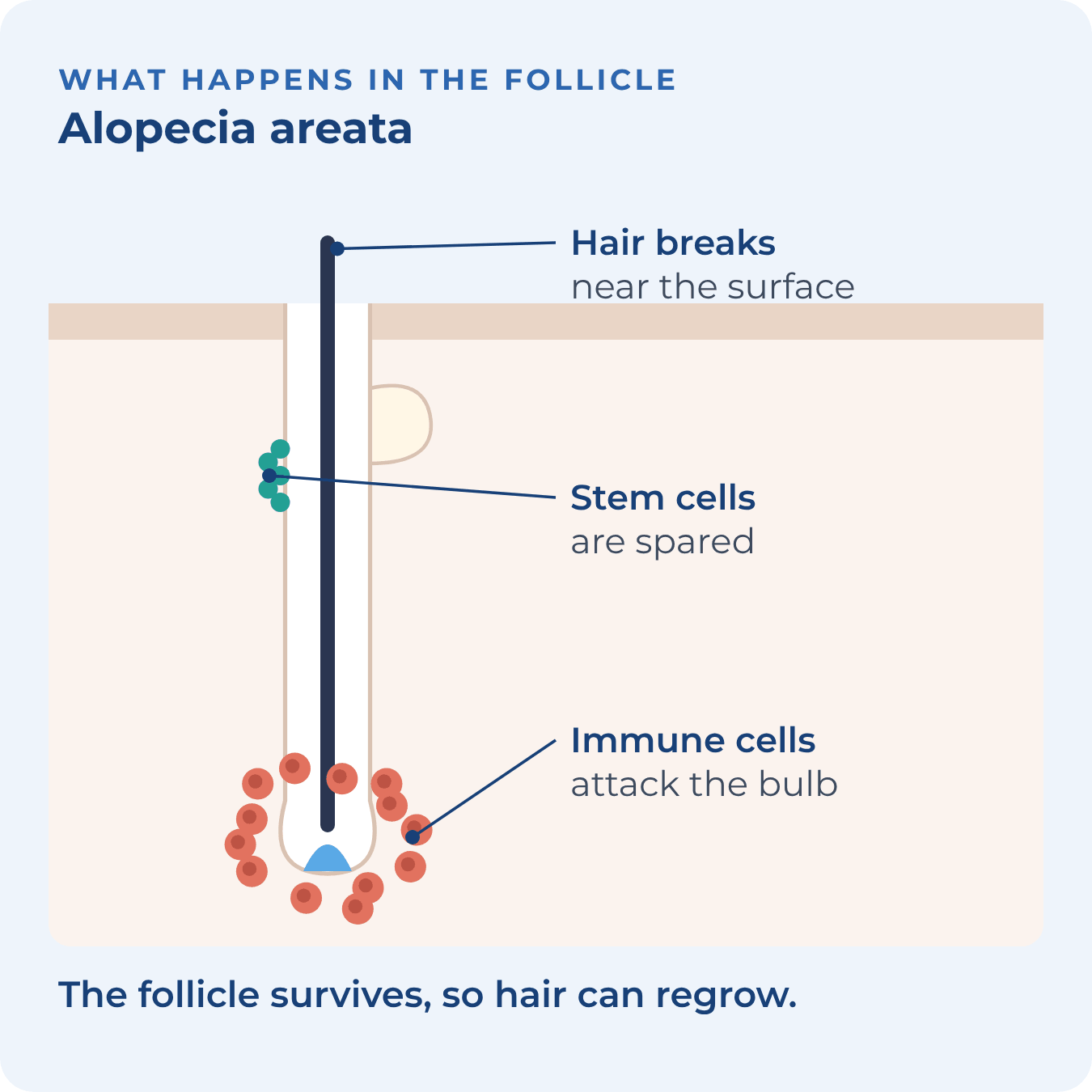
About 2 in 100 people develop it at some point in life. It can start at any age, including childhood. It can run in families. It is more common in people with eczema, allergies or thyroid disease.
Smooth, round patches with no redness or scale. Eyebrows, lashes, beard and nails can be affected. Some people lose all scalp or body hair.
Steroid injections every 4 to 6 weeks are our main treatment for patches. Steroid creams rarely reach deep enough. Minoxidil, used off label, can help hair regrow thicker. For severe disease, three oral JAK inhibitors are FDA approved. Baricitinib and ritlecitinib are approved for ages 12 and up. Deuruxolitinib is approved for adults. These pills need blood tests before and during treatment. Methotrexate is used off label. In people with eczema, dupilumab may help the hair too.
From our work: Dr. Senna was an investigator in the BRAVE-AA trials of baricitinib, the first FDA approved pill for severe alopecia areata. See our current trials, or watch Dr. Senna's 2024 treatment update webinar for patients.
Pattern hair loss
Pattern hair loss is the most common cause of thinning in both men and women. Genes and hormones shrink the follicles over time, so they grow finer, shorter hairs. In men, hormones called androgens drive this. In women, hormones play a role, but other causes are involved too.
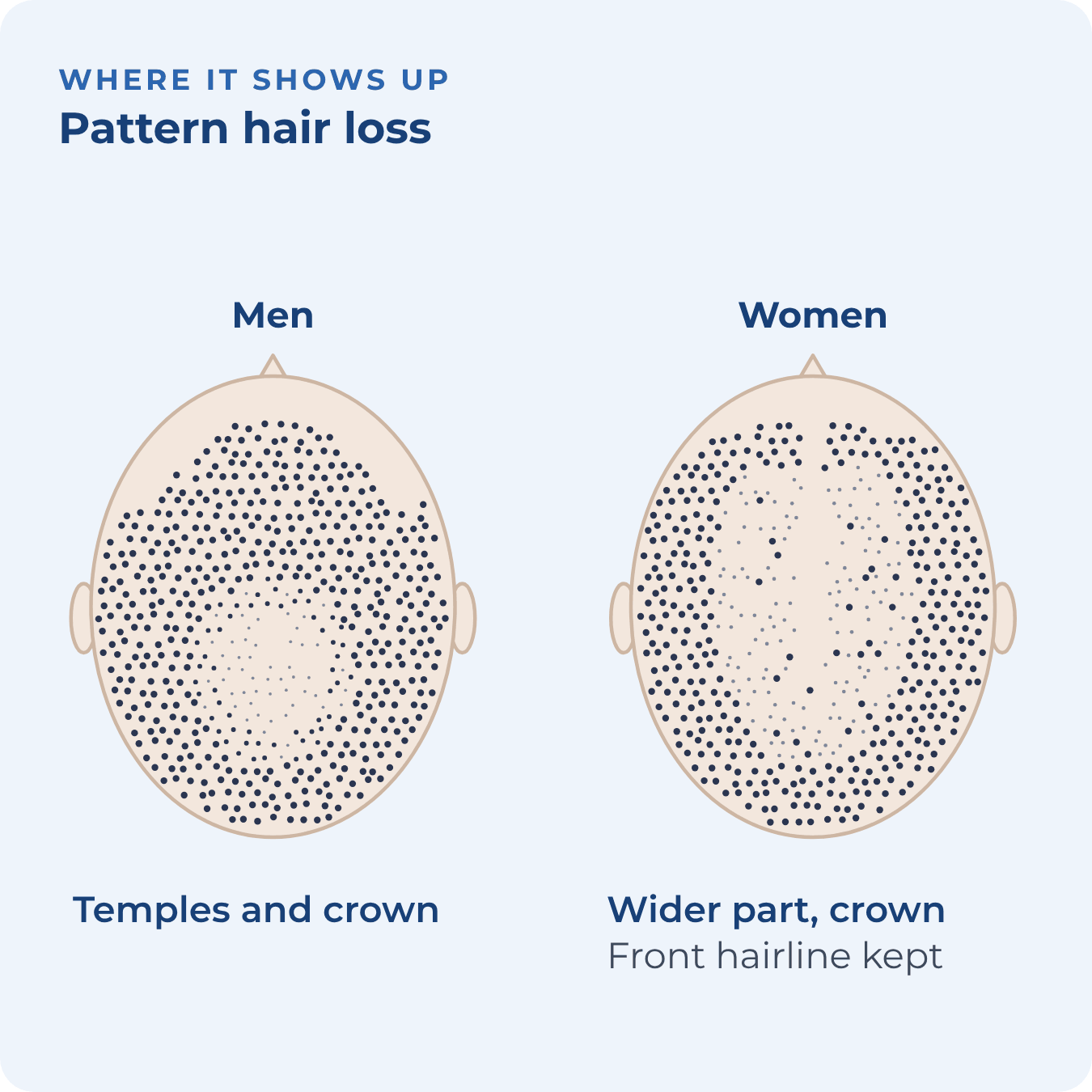
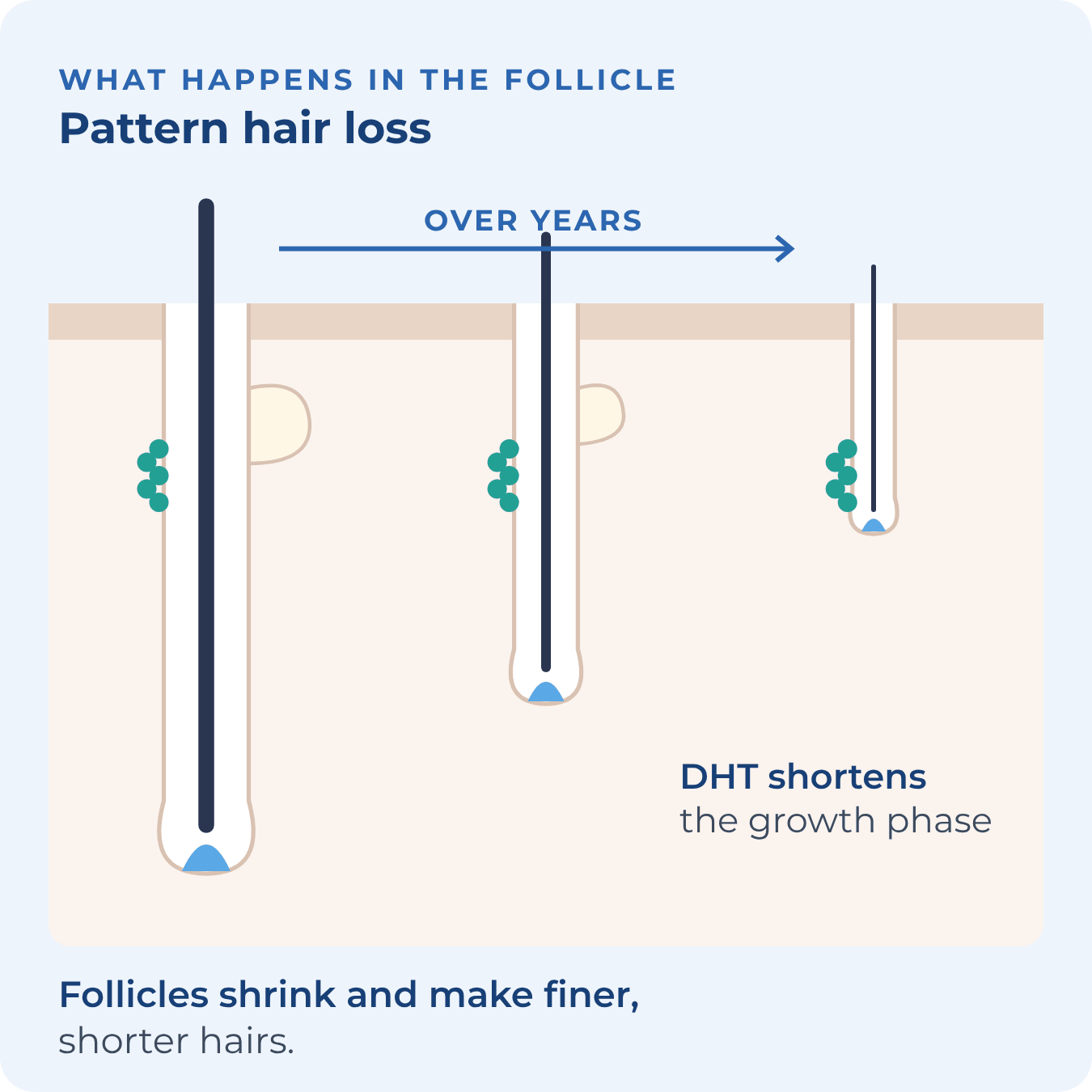
Nearly half of men are affected by age 50. Many women are affected too, especially after menopause. Polycystic ovary syndrome can contribute. A family history is common.
Men: a receding hairline at the temples and thinning at the crown. Women: a wider part and thinning over the top, with the front hairline kept.
Topical minoxidil is FDA approved for men and women. Oral finasteride is FDA approved for men. Low dose oral minoxidil, dutasteride, and spironolactone for women are used off label. Platelet-rich plasma (PRP) injections are not FDA approved for hair loss and are usually not covered by insurance. Treatment must continue long term to keep the benefit.
From our work: Our studies include spironolactone for women, which lab tests are useful and the cancer safety of finasteride and dutasteride in women.
Telogen effluvium
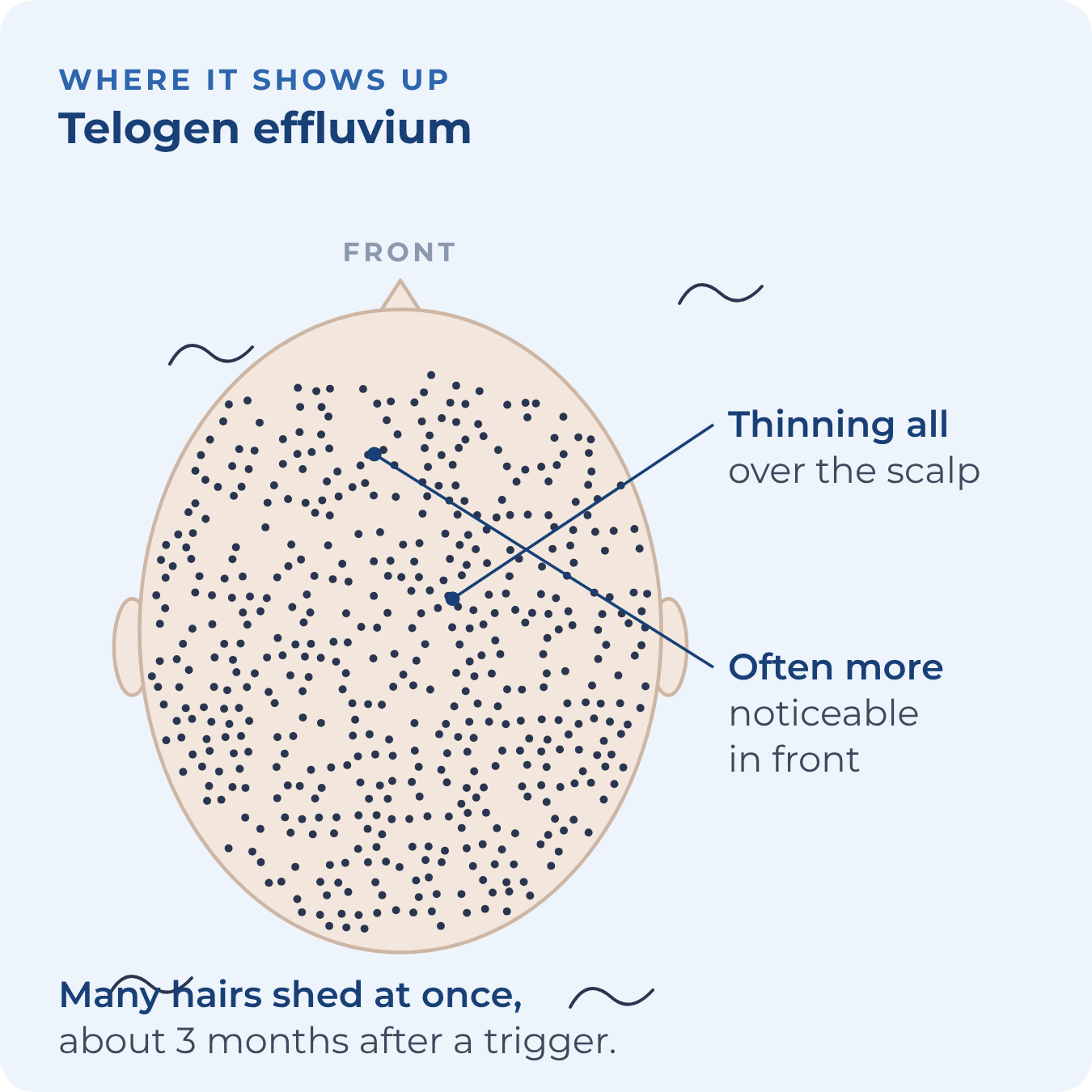
Telogen effluvium is sudden, widespread shedding. A stressful event pushes many growing hairs into a resting phase at once. Those hairs fall out together about 3 months later.
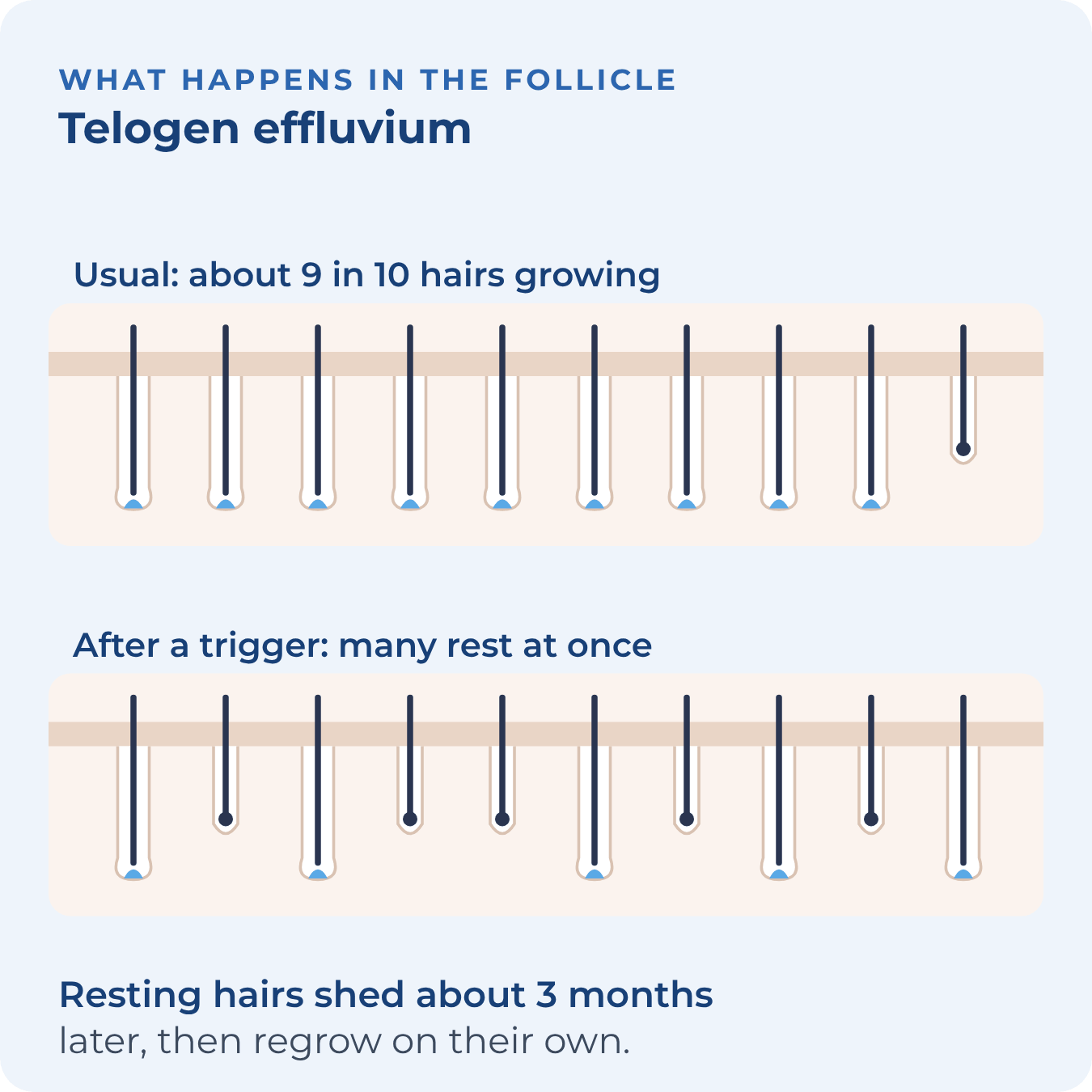
Anyone. Common triggers are childbirth or miscarriage, high fever, surgery or a hospital stay, major stress, weight loss of 10 pounds or more, thyroid problems, starting or stopping birth control, and menopause.
Much more hair than usual in the shower, brush or pillow, sometimes up to 300 hairs a day. Thinning all over the scalp, often more in front.
Shedding usually lasts about 3 months and then stops on its own. Hair grows back, but slowly, about 1 cm a month. No treatment is proven to stop it, and supplements are not needed unless a test shows a deficiency. See a dermatologist if shedding has not settled after 6 months.
Patient handout: Read Dr. Senna's guide to telogen effluvium (PDF). You can also read more about shedding on our patient page.
Hair loss from chemotherapy
Chemotherapy targets fast dividing cancer cells. Cells in the hair bulb also divide quickly, so many chemotherapy drugs cause hair loss.
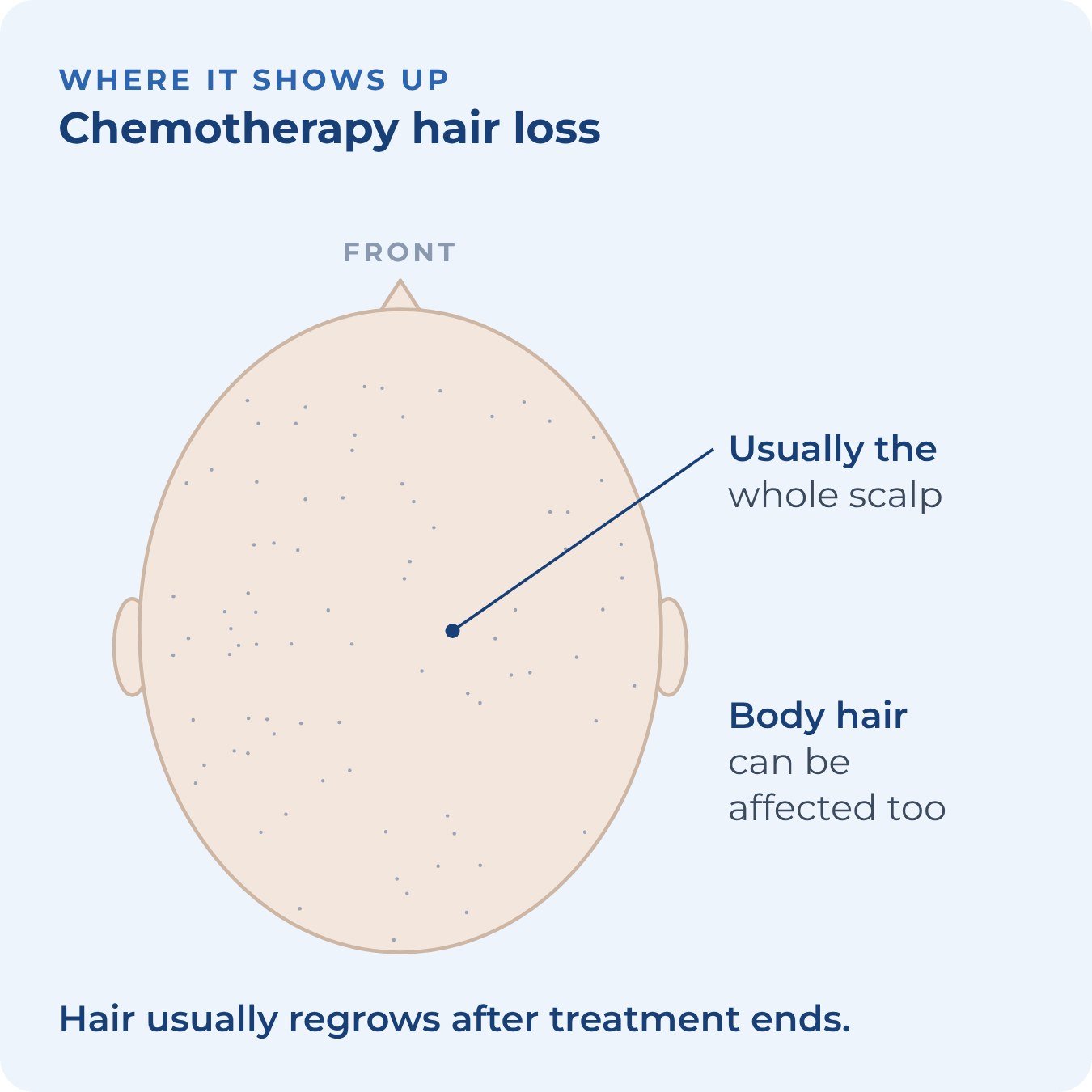
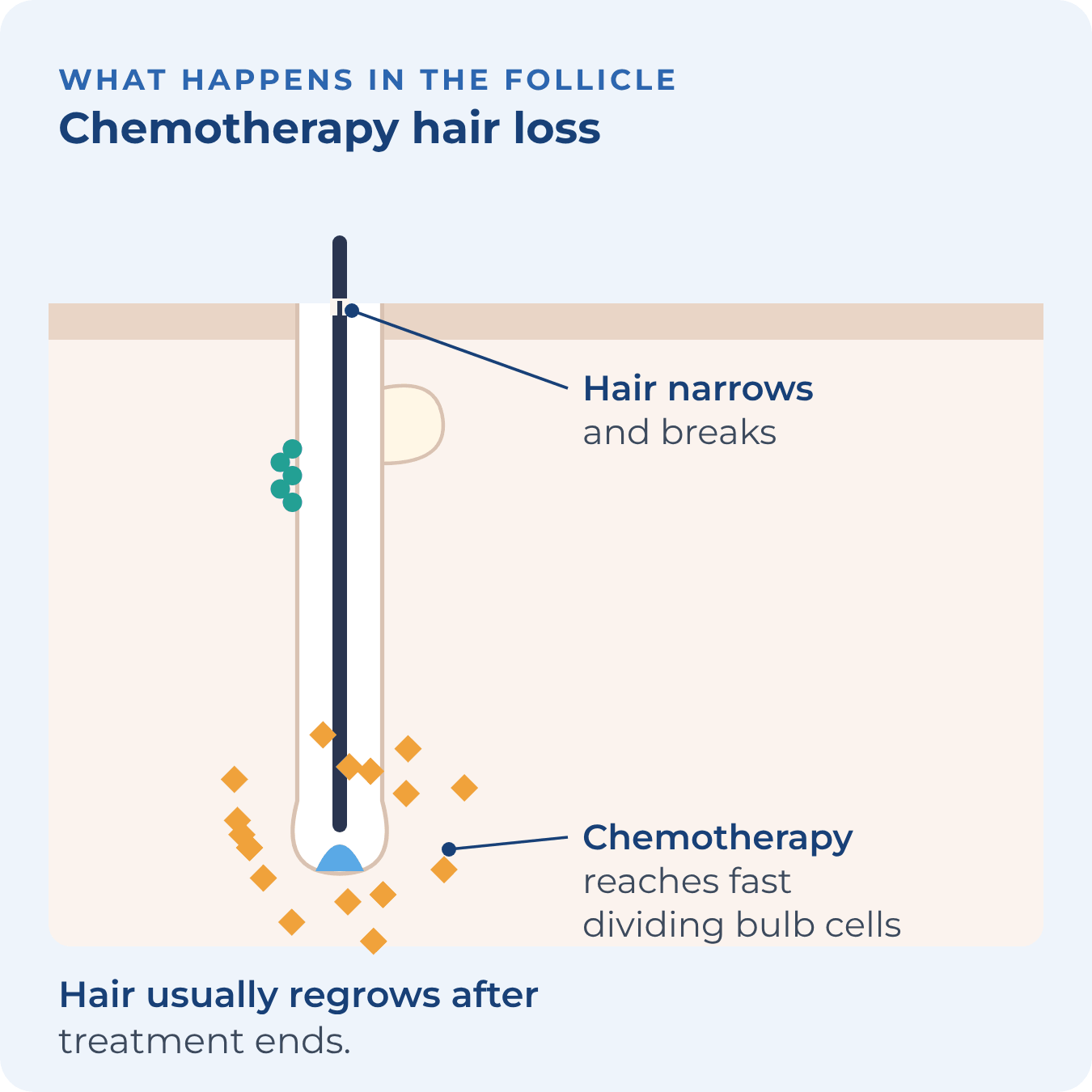
People receiving chemotherapy. How much hair is lost depends on the drug.
Loss usually affects the whole scalp. Eyebrows, lashes and body hair can be lost too. Hair usually regrows within months after treatment ends.
Scalp cooling during treatment helps some patients with solid tumors keep their hair. Ask your oncology team if it is right for you. When hair does not fully return, low dose oral minoxidil, used off label, may help.
From our work: Dr. Senna has studied scalp cooling and quality of life during chemotherapy.
Traction alopecia
Traction alopecia comes from repeated pulling on the hair. Tight braids, ponytails, buns, extensions and weaves all add tension at the hairline.
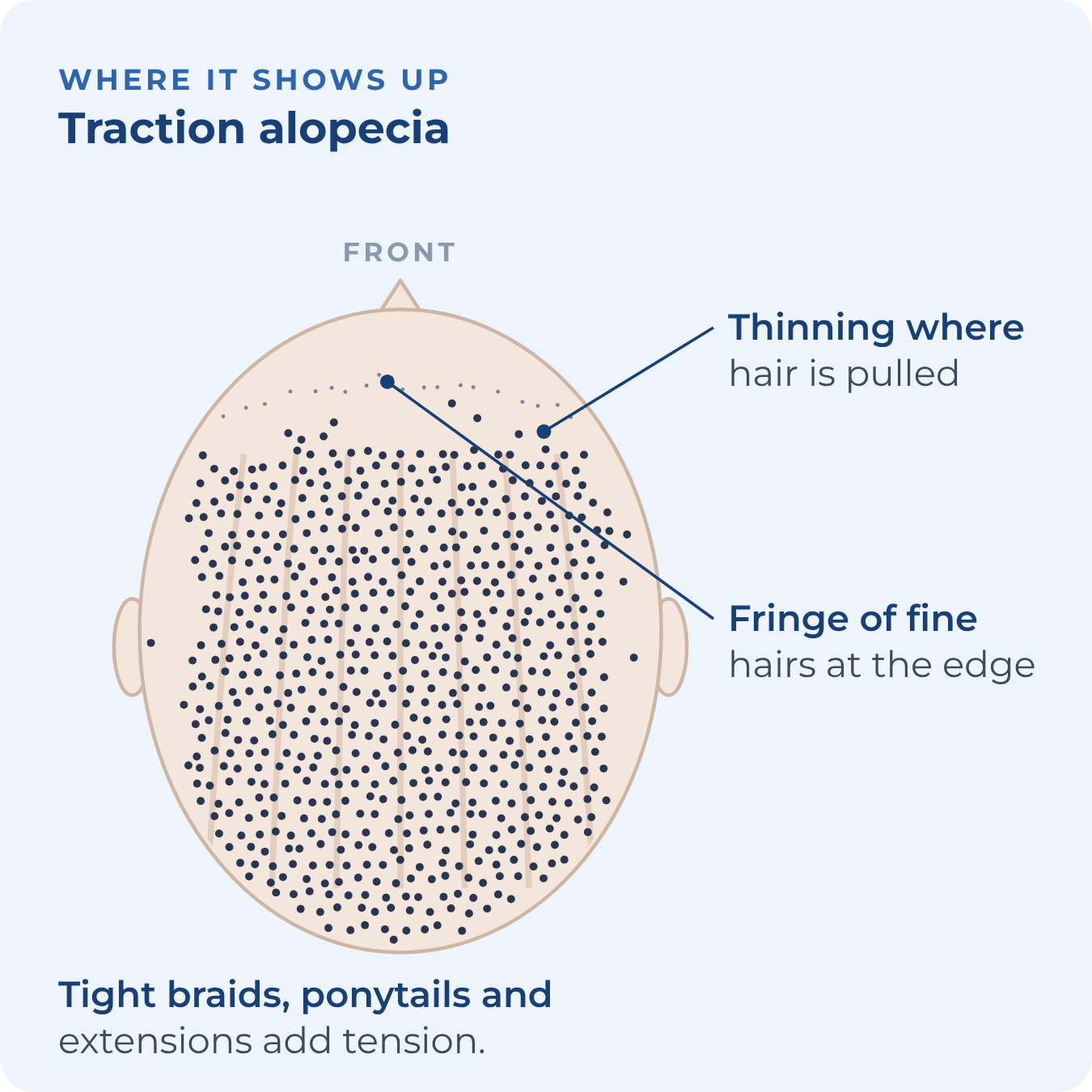
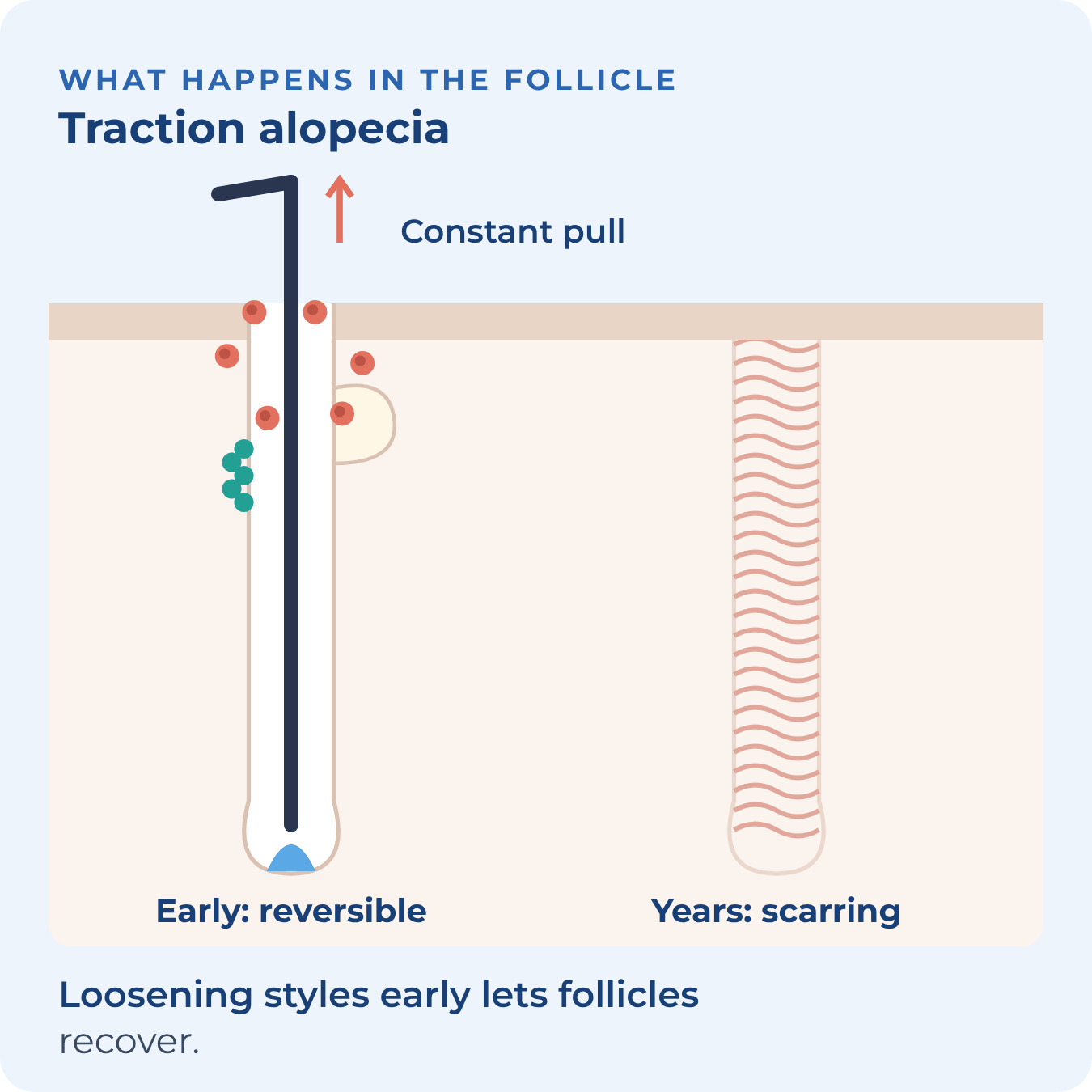
Anyone who often wears tight styles.
Thinning along the front and sides of the hairline. A fringe of fine hairs often stays at the very edge.
Early traction alopecia is reversible. Looser styles let follicles recover. Years of tension can cause permanent scarring, so early changes matter.
Frontal fibrosing alopecia can look like traction alopecia. See the difference below.
Scarring hair loss
Lichen planopilaris
Lichen planopilaris (LPP) is a scarring alopecia. Immune cells attack the stem cells of the hair follicle. Scar tissue then replaces the follicle.
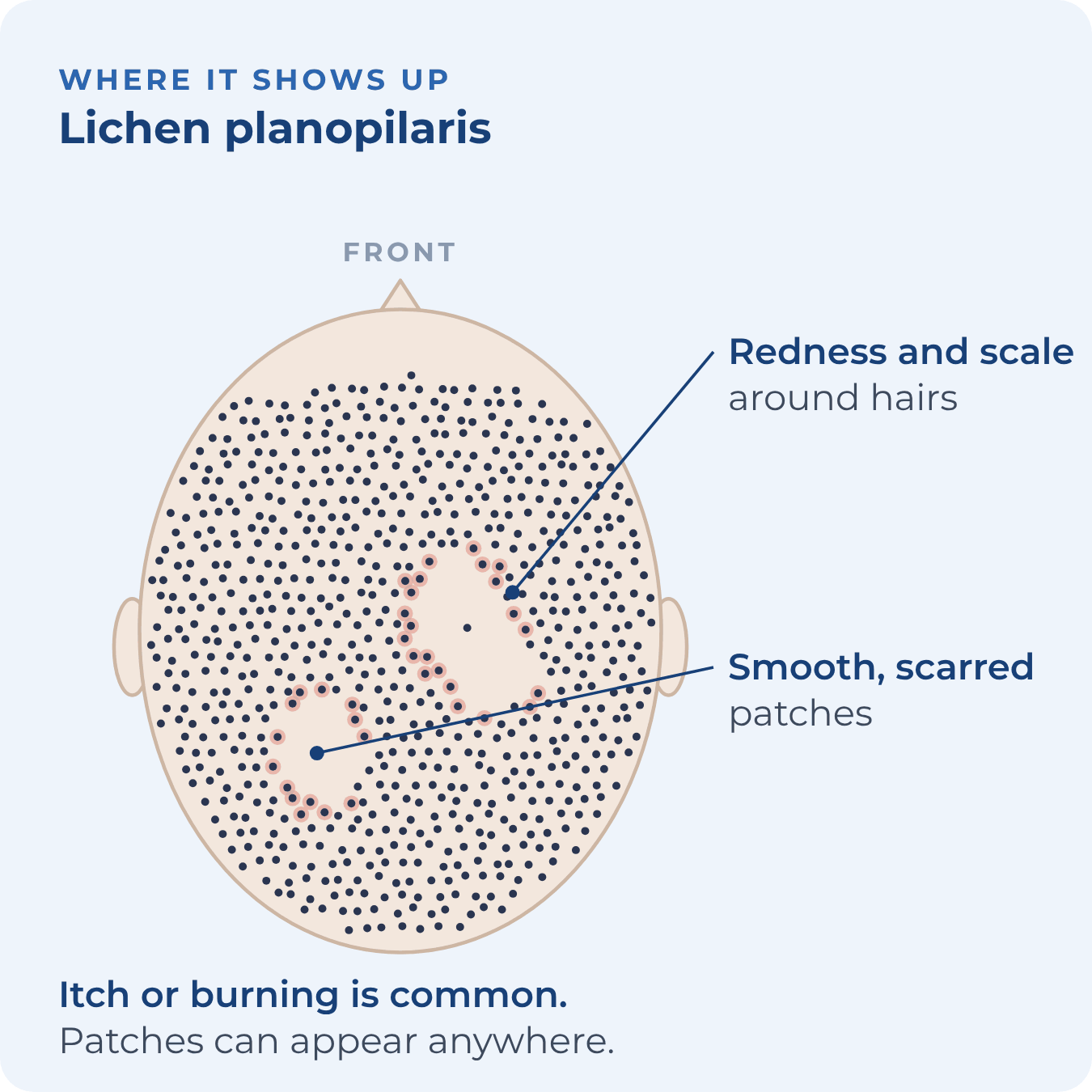
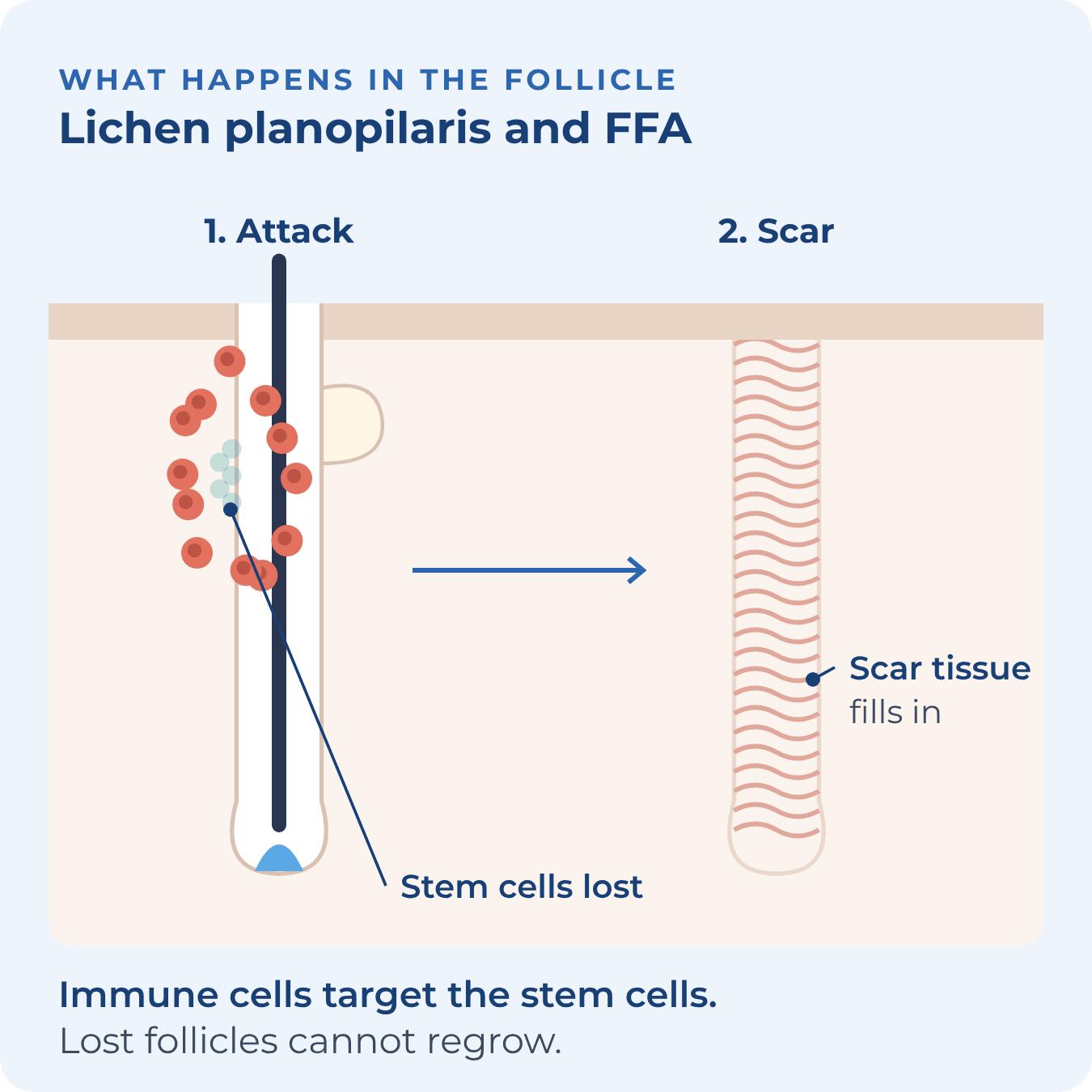
Most patients are women, usually in middle age. Men can be affected too.
Patchy hair loss with redness and scale around the hairs. Itching, burning or tenderness is common. Some people have no symptoms.
There is no FDA approved treatment yet. Options include steroid solutions and injections, tacrolimus, hydroxychloroquine, tetracycline antibiotics, other anti-inflammatory pills and excimer laser. Hydroxychloroquine needs an eye exam before starting and once a year. Treatment usually lasts at least a year. JAK inhibitors are being studied.
From our work: We studied topical tofacitinib for LPP and FFA and are a site for a trial of brepocitinib in LPP.
Frontal fibrosing alopecia
Frontal fibrosing alopecia (FFA) is a form of lichen planopilaris. It slowly moves the front hairline back. The same immune attack on the stem cells causes the scarring.
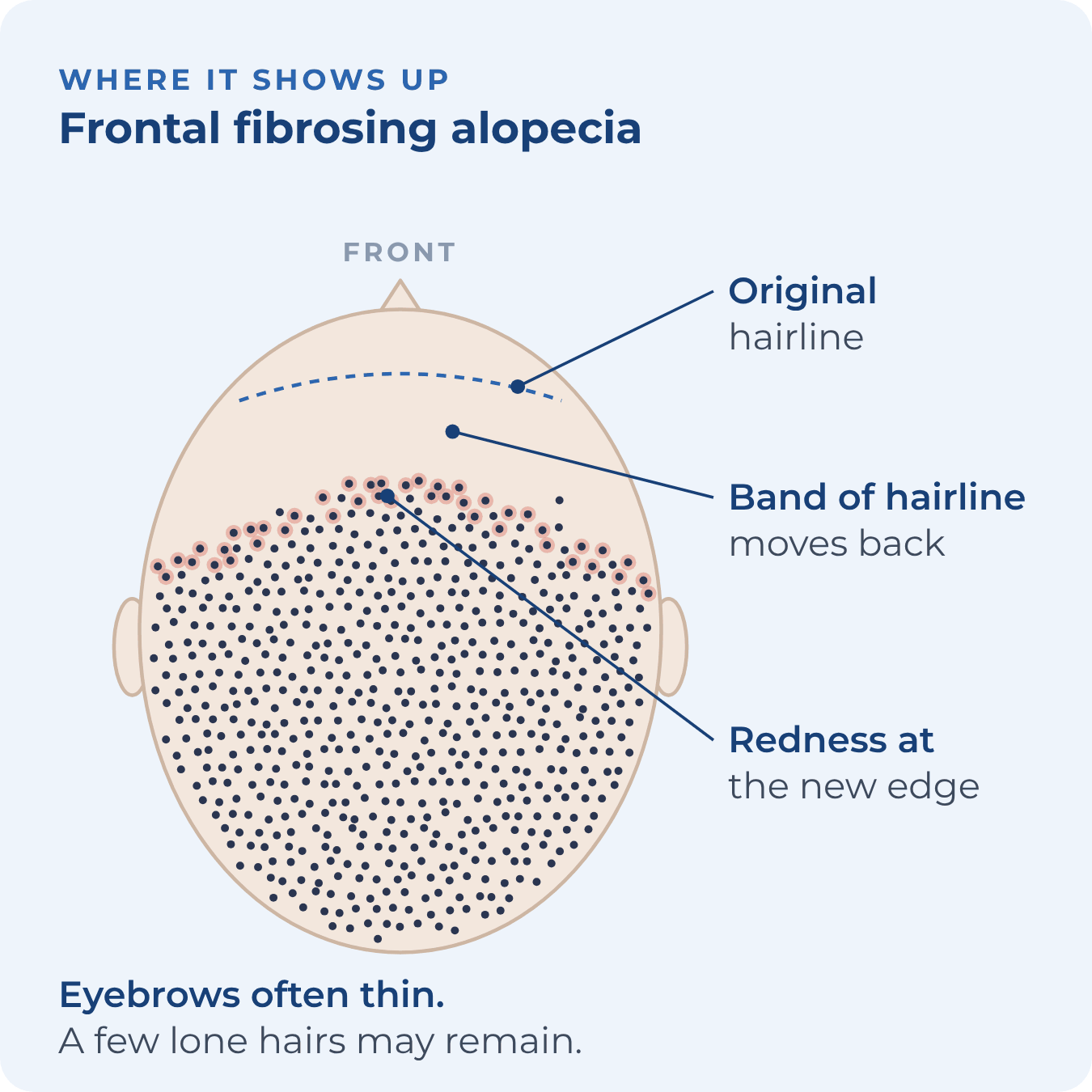
Mostly women after menopause. It also occurs in younger women and in men. In Black women it is often mistaken for traction alopecia.
A band of recession along the front and sides of the hairline. Eyebrow loss is common. Smooth, pale skin below the old hairline, sometimes with a few lone hairs. Small skin-colored bumps on the face and loss of body hair can occur.
There is no FDA approved treatment yet. Options include steroid creams and injections, finasteride or dutasteride, hydroxychloroquine and anti-inflammatory creams. We track hairline measurements and photos over time. Some studies link FFA to leave-on facial products and chemical sunscreens, so we suggest mineral sunscreen with zinc oxide or titanium dioxide and fragrance-free products.
From our work: Our randomized trial of delgocitinib cream in FFA was published in 2026. We also studied FFA and LPP in 270 men.
Central centrifugal cicatricial alopecia (CCCA)
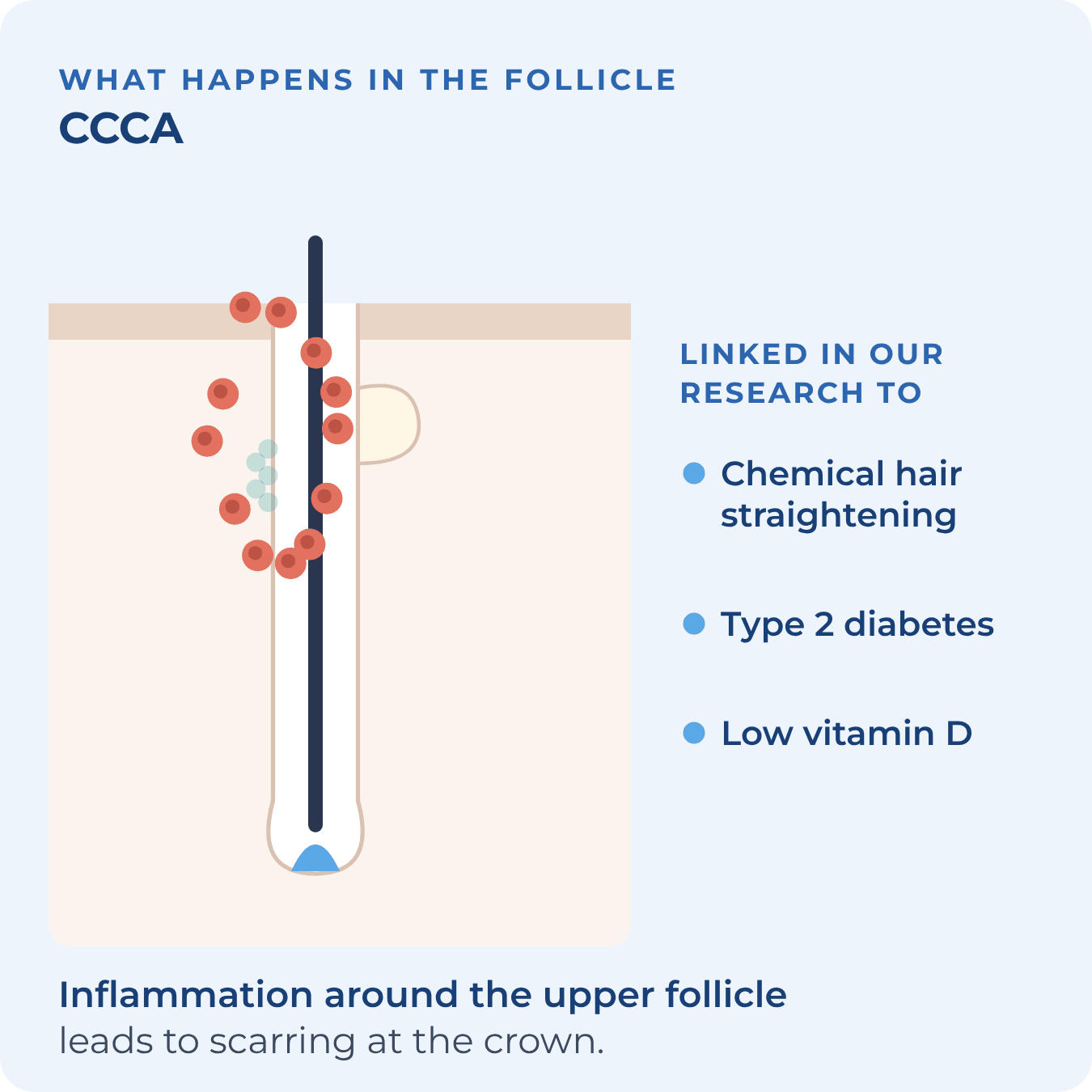
CCCA is a scarring alopecia that starts at the crown and spreads outward. Inflammation around the upper follicle leads to permanent scarring.
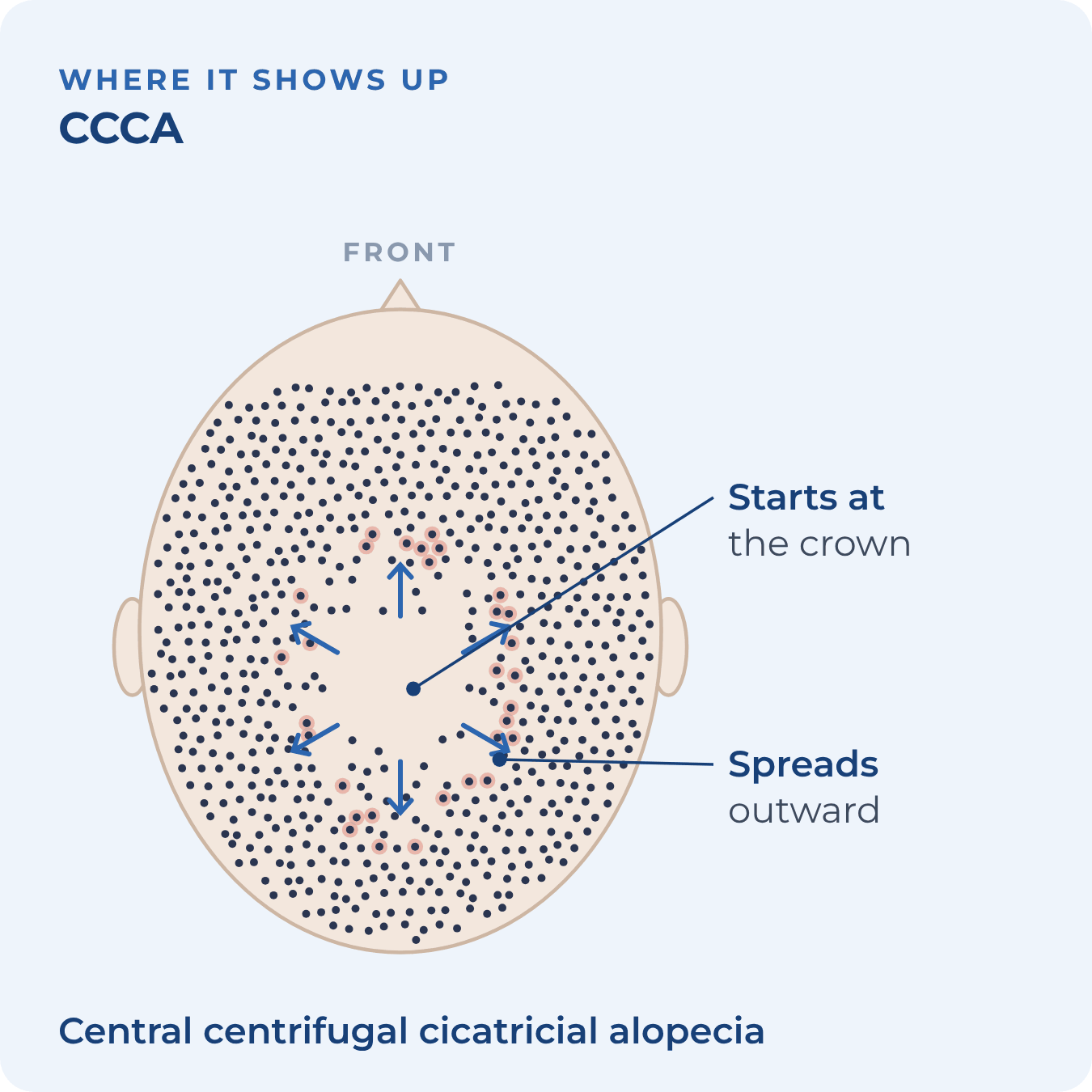
It most often affects Black women. It can run in families.
Gradual thinning at the crown that widens over time. Some people feel itching or tenderness. Others notice nothing until thinning is visible.
There is no FDA approved treatment yet. Steroid creams and injections and doxycycline are common first steps. Hydroxychloroquine and minoxidil are also used. Gentle hair care helps: fewer chemical relaxers, looser styles and less heat.
From our work: Dr. Senna coauthored national consensus recommendations on CCCA treatment. Our studies linked type 2 diabetes to more severe CCCA. We have also studied low vitamin D and chemical hair straightening.
Folliculitis decalvans
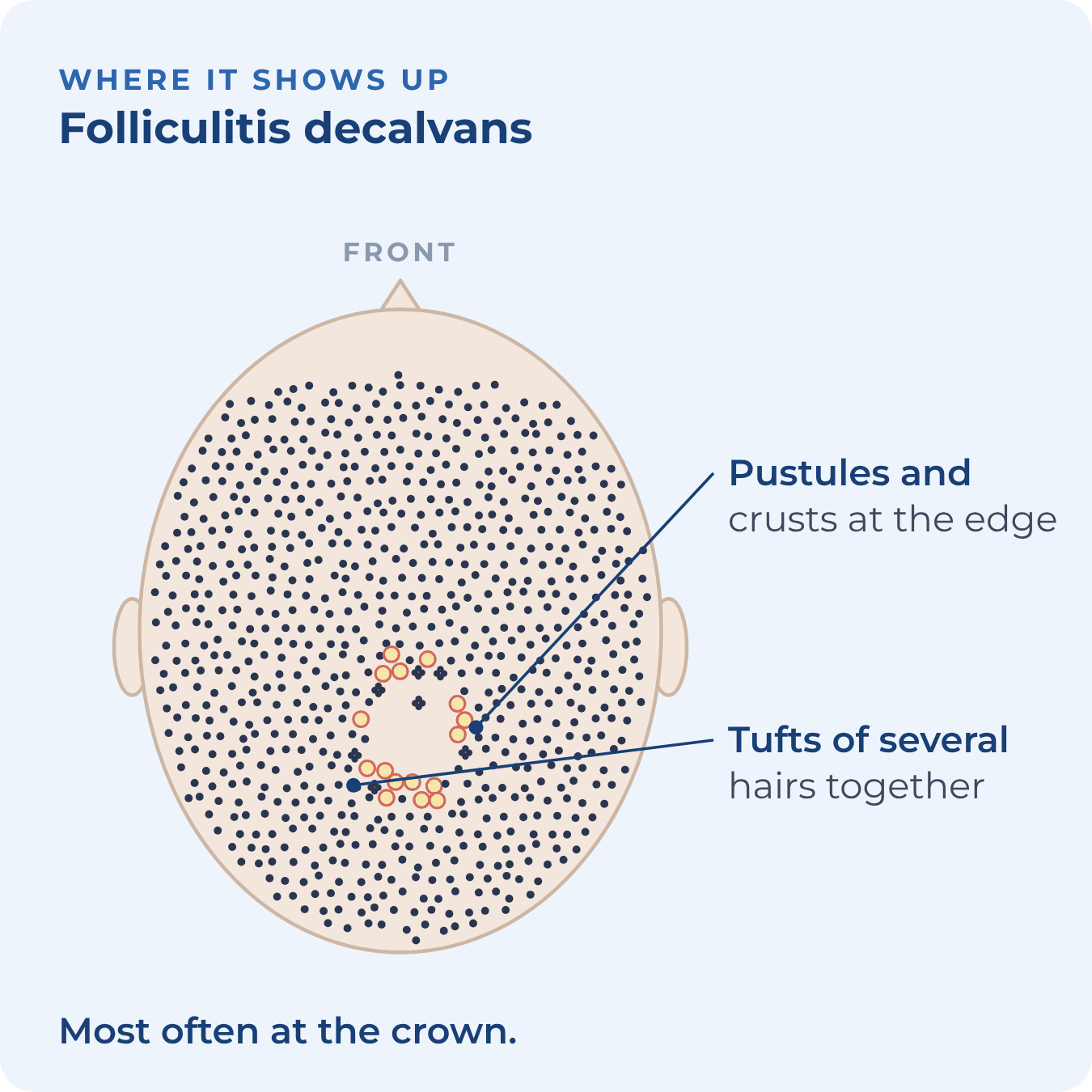
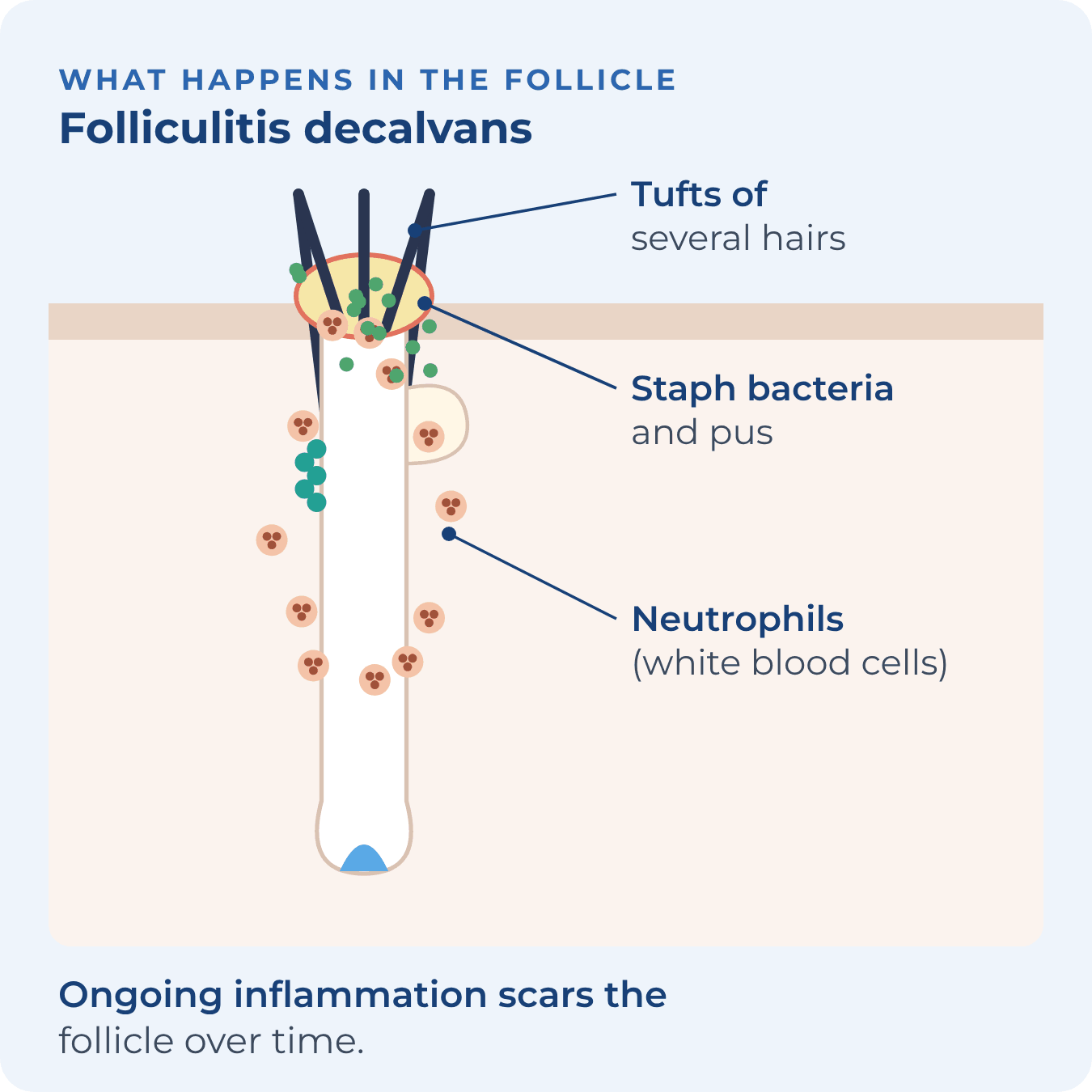
Folliculitis decalvans is a scarring alopecia driven by inflammation and bacteria around the follicle. Ongoing inflammation scars the follicle over time.
Mostly young and middle-aged adults. It is slightly more common in men.
Pustules, crusts and tenderness, most often at the crown. Several hairs may grow from one opening, called tufting.
Long courses of antibiotics are the main treatment. Steroid creams or injections calm inflammation. Other pills, used off label, are options in stubborn cases.
Discoid lupus
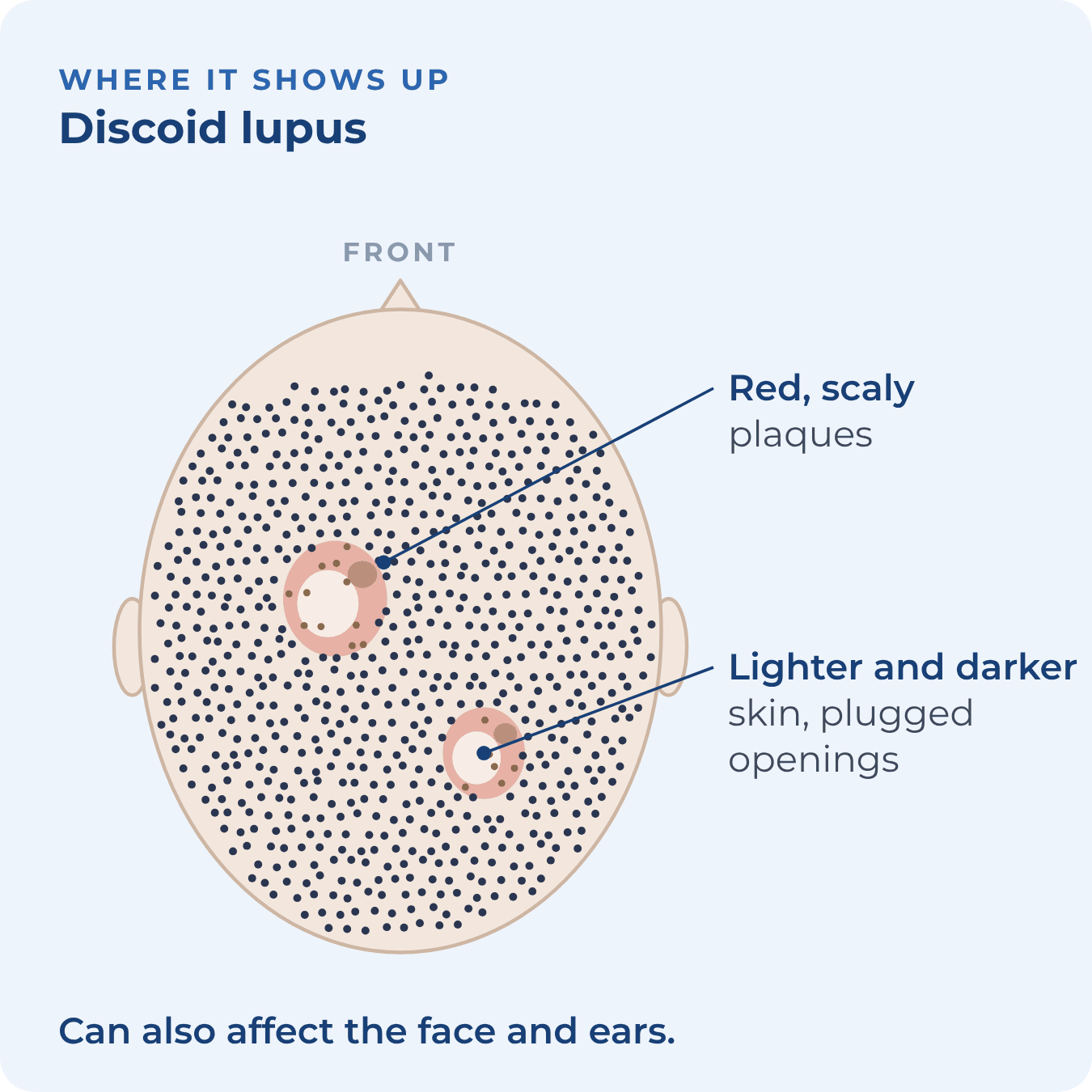
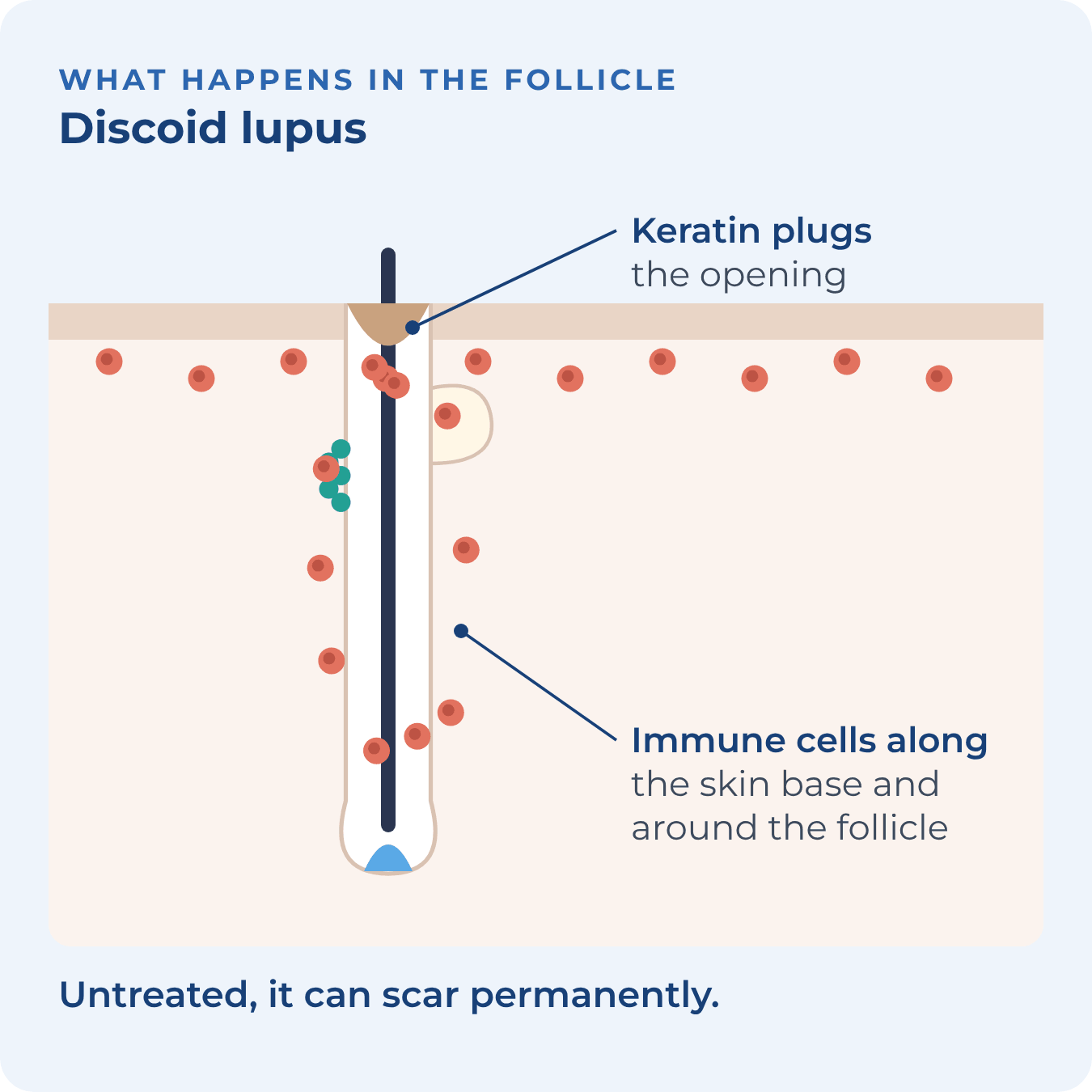
Discoid lupus is a form of lupus that affects the skin. On the scalp, it can scar follicles and cause permanent hair loss.
It can occur on its own or with lupus elsewhere in the body.
Red, scaly patches that become smooth and scarred. Lighter and darker color changes in the skin. The face and ears can be affected too.
Steroid creams and injections and antimalarial pills such as hydroxychloroquine. Early treatment helps limit scarring. Sun protection helps, and smoking can make it worse. Your doctor may check blood tests for lupus elsewhere in the body.